
Entry preparation and filing
We organize the commercial and shipment data needed to prepare and file the customs entry.
U.S. customs brokerage services, powered by licensed experts and AI.
Talk to an ExpertCustoms brokerage services
Forge combines licensed customs expertise with software that keeps shipment data, classifications, documents, and release status in one place. Your team gets a broker that can move quickly without adding another manual process.
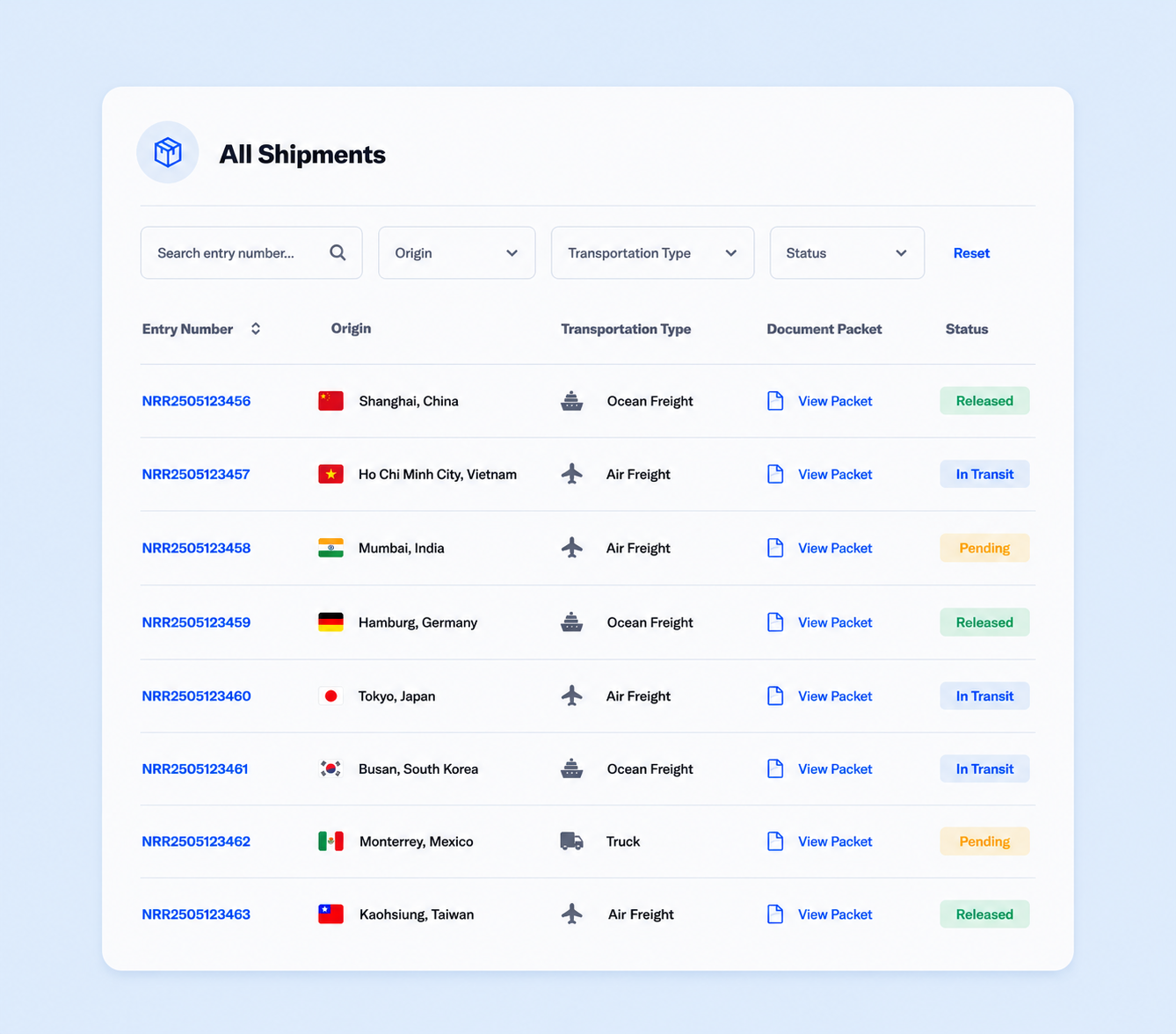
Entries are prepared and filed ahead of arrival so issues can be addressed before freight reaches the border. Shipment documents and status stay accessible in the Forge platform.
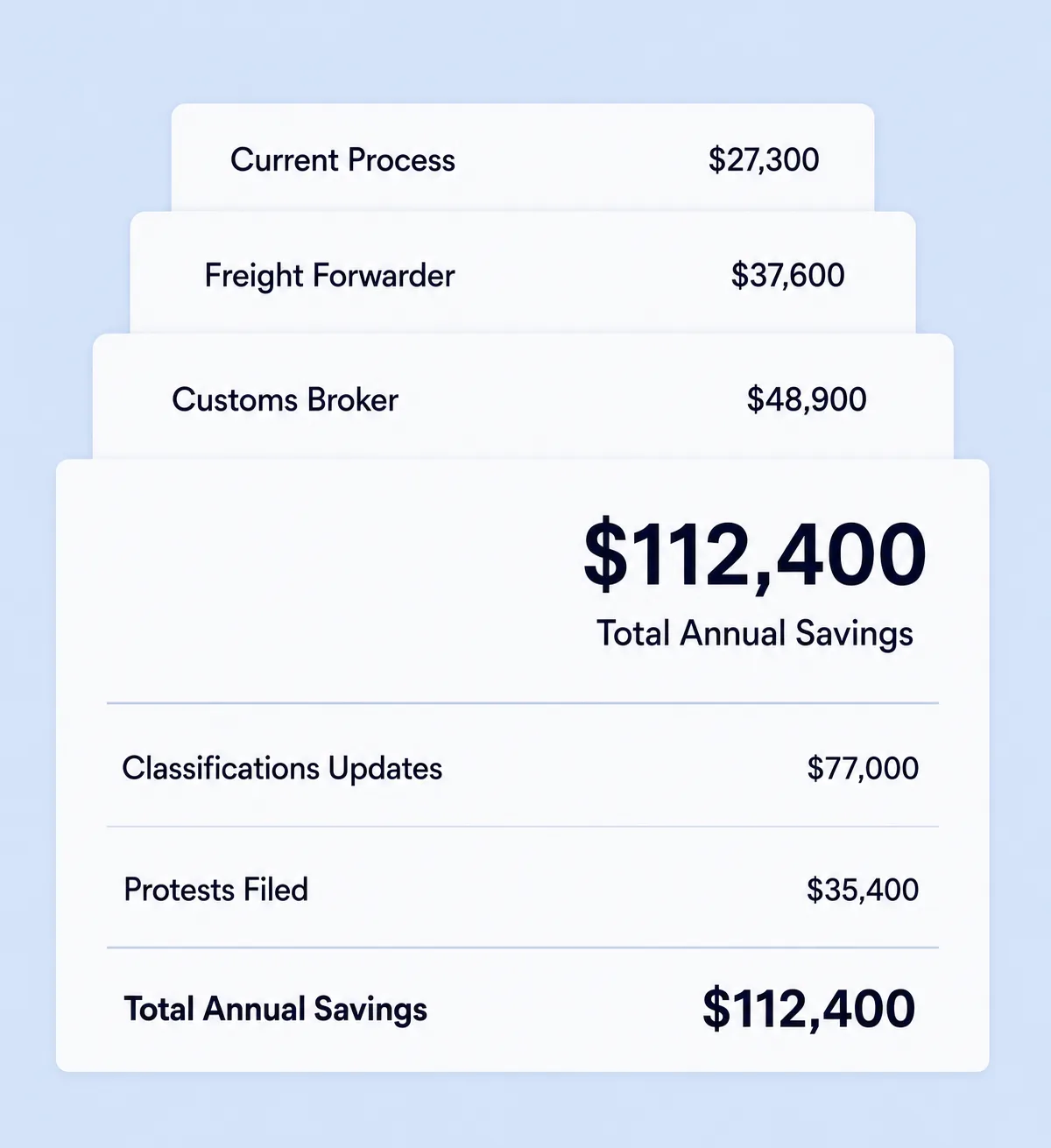
Our team reviews your supply chain for available exemptions, classification issues, and other opportunities to reduce duty exposure while staying compliant.
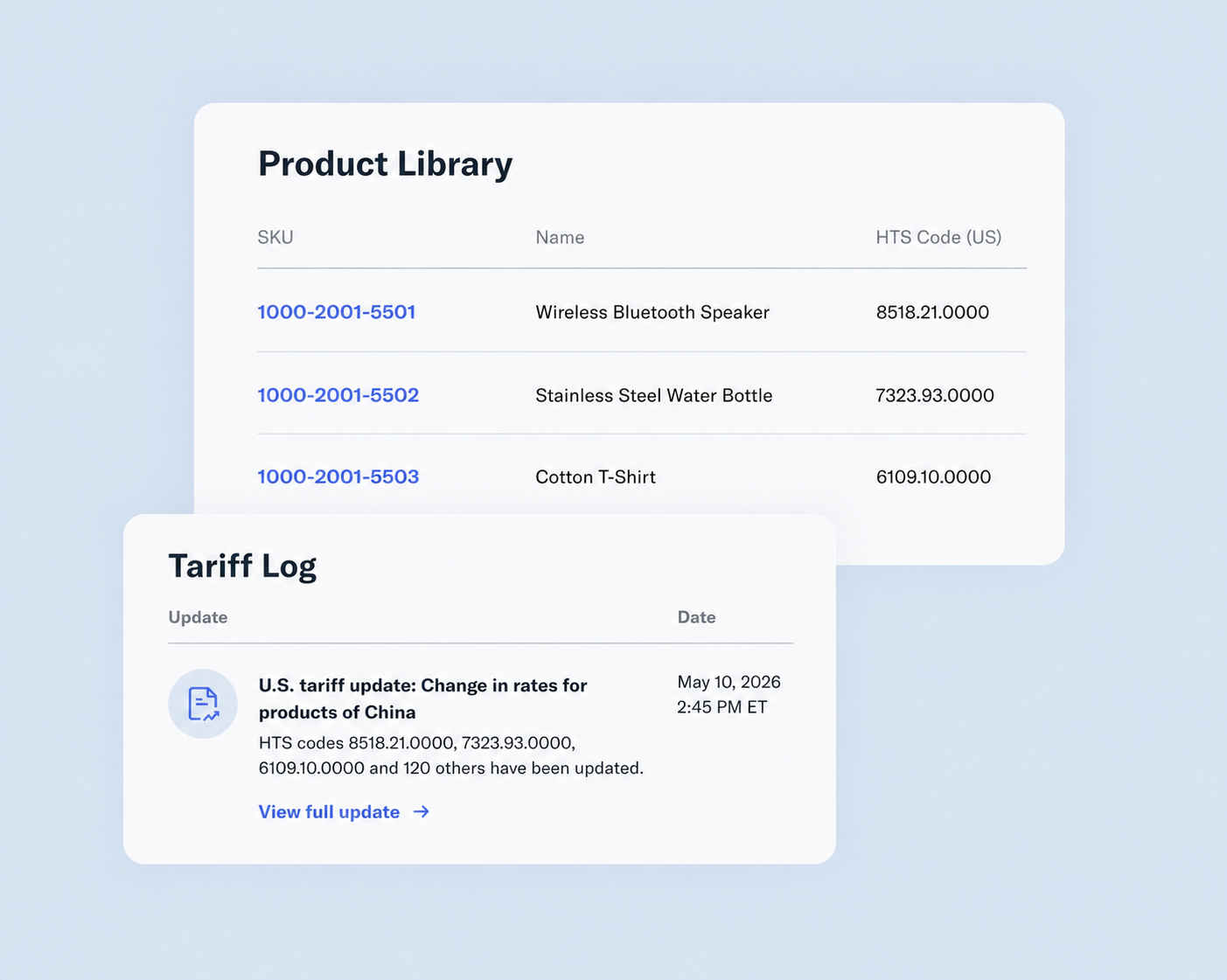
Forge classifies products and keeps the supporting record with your shipment data. Accurate HTS classification helps importers calculate duties correctly and maintain a defensible entry history.
What Forge handles
The work stays connected from the first product detail through release and recordkeeping.
We organize the commercial and shipment data needed to prepare and file the customs entry.
Products are mapped to HTS codes with the classification record kept alongside the underlying data.
Our team reviews duties, tariffs, and available trade programs that may affect the entry.
Your team can follow shipment status and return to the documents and entry history when needed.
How it works
Forge’s team and software work together so the information needed for an entry does not have to be rebuilt shipment by shipment.
Share the commercial invoice, product details, and transportation documents with the Forge team.
We review the entry data, confirm classifications, and identify questions before filing.
Our licensed customs team prepares and files the entry ahead of arrival when documentation is available.
Track clearance status and keep the final entry documents available in one system.
An extension of your team
Forge gives importers a dedicated customs team and a shared system for the work surrounding every entry.
Reach the team over email, phone, Slack, or the channel your company already uses.
See clearance status, documents, product data, and billing in one place.
Keep HTS codes and tariff updates tied to the products and entries they affect.
When an import may qualify for a tariff refund or duty drawback, the underlying entry data is already organized.
Questions importers ask
A customs broker helps an importer prepare and file entries with U.S. Customs and Border Protection, classify merchandise, calculate applicable duties, maintain records, and address questions that can affect release.
Importers can manage customs filings themselves, but many use a licensed broker to handle the entry process, classification, documentation, and communication around clearance. The right choice depends on your shipment volume, product complexity, and internal trade expertise.
The exact requirements depend on the shipment and product. Common records include a commercial invoice, packing list, bill of lading or air waybill, product descriptions, country of origin, valuation details, and importer or bond information.
As early as possible. When shipment and product information is available before arrival, Forge can prepare the entry and surface missing information before the goods reach the border.
Yes. Forge’s customs team classifies products, records the HTS codes used, and keeps classification information connected to your product and shipment data.
Customers work with a dedicated team and can reach them over email, phone, Slack, or their existing channel. Shipment status, documents, compliance records, and billing remain accessible through the Forge platform.
Related services and guides
Customs clearance is the start of the record. Forge also helps importers pursue eligible tariff and duty refunds.
See how Forge helps eligible importers file for and recover IEEPA tariffs.
ServiceRecover eligible duties on goods that are later exported or destroyed.
GuideCompare the two recovery paths and learn when an importer may qualify for both.
